




Artificial intelligence is no longer just shaping digital infrastructure. It is increasingly influencing how people live, learn, and make long-term housing decisions – with significant implications for real estate markets.
A new paper by M&G – Global Real Estate Outlook 2026: Real estate in the age of AI – Mapping tomorrow’s landscape – explores the shifts in learning, employment and lifestyle that are beginning to reshape housing demand across every life stage – and what this means for real estate investors and developers navigating an AI-driven future.
The first in the series looked at student living in the age of AI. The second looks at residential living and how AI influences people’s housing decisions.
AI has reignited a long-running debate in real estate: will technology disperse populations or reinforce urban clustering? In residential markets, M&G’s paper highlights that the answer appears to be both – with lifestyle choices likely to become the dominant driver.
AI-enabled remote work and advanced logistics could give many professionals unprecedented flexibility over where they live. This has opened the door to more mobile lifestyles, including demand for fully furnished, flexible-lease homes designed for short stays and subscription-style living. For some, residential choice is becoming less about proximity to an office and more about personal experience.
M&G’s paper highlights that history suggests that new technologies often strengthen cities rather than weaken them. Just as railways and telecommunications reinforced global hubs, AI may further concentrate talent in locations where creativity, collaboration and culture intersect. Roles that require human judgment, innovation, and in-person interaction continue to thrive in dense, experience-rich urban centres.
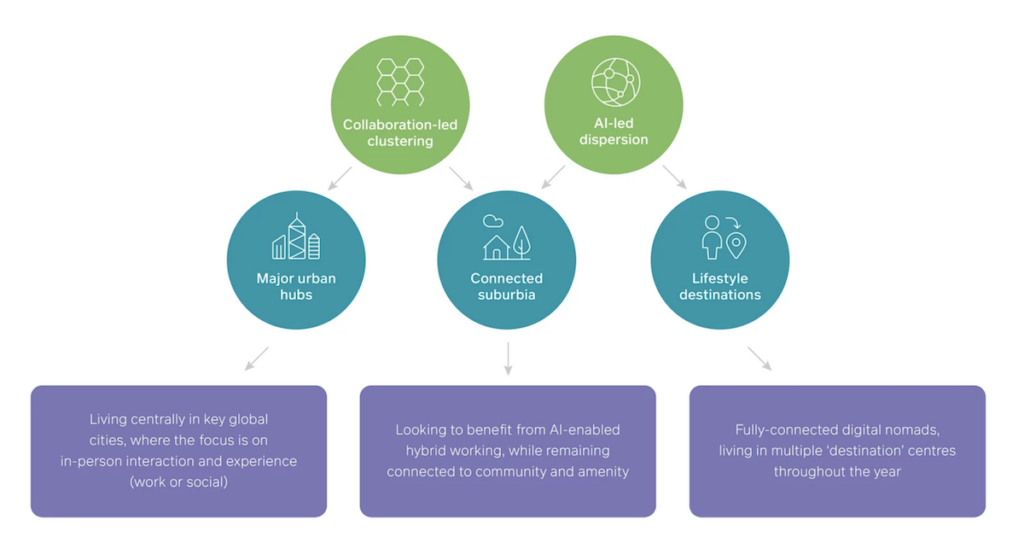
As a result, major global cities are likely to retain their gravitational pull, supporting long-term demand for multifamily residential assets. At the same time, AI is expanding the practical limits of commuting. Autonomous vehicles, smarter transport systems, and improved delivery infrastructure make longer-distance living more viable without severing access to urban opportunity.
This dynamic is accelerating growth in extended commuter belts. Families seeking space, affordability, and quality of life can live further from city centres while maintaining strong employment prospects. M&G says that AI-driven tools also help residents identify communities aligned with their values, schools and lifestyle preferences.
Residential markets that fail to offer either vibrancy or value risk being squeezed, the paper states. Locations that combine high costs with limited cultural or social appeal may struggle as households increasingly optimise where – and why – they live.